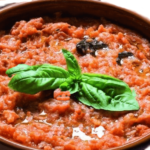

Pici con le briciole (Pici with breadcrumbs) is one of the most authentic expressions of Southern Tuscany’s peasant cooking. This traditional dish combines an eggless, hand-rolled fresh pasta made of just flour and water with a humble yet incredibly flavorful topping: toasted stale bread cooked in extra virgin olive oil.
Recipe Index
History of Pici with Breadcrumbs: A Sienese Tradition
The origins of this dish are deeply rooted in the agricultural world of southern Tuscany, historically centered around the Val d’Orcia, Val di Chiana, and the slopes of Mount Amiata. The first notable modern bibliographic record comes from scholar Giovanni Righi Parenti in 1991, who codified this and other recipes of Sienese popular memory. Unlike other variations enriched with meat or mushroom ragù, the “breadcrumbs” version relied exclusively on long-lasting pantry staples, allowing peasant families to make it year-round.
Using stale bread crumbled and toasted was a brilliant necessity: it recovered table scraps and visually and texturally simulated grated cheese. For this reason, it earned the famous nickname “poor man’s parmesan” (cacio dei poveri), a classic example of peasant culinary ingenuity. Cementing its cultural value, in December 2022, the village of Celle sul Rigo (in the municipality of San Casciano dei Bagni) established the “Pici di Celle” Collective Geographical Mark to protect the traditional hand-rolling technique.
Ingredients for 4 Servings
| Ingredient | Quantity | Notes |
|---|---|---|
| Type 00 or All-Purpose Flour | 400g (3 ¼ cups) | Plus semolina flour for dusting |
| Water | 200ml (¾ cup + 1 tbsp) | Room temperature |
| Stale Bread | 150g (3 cups crumbled) | Preferably unsalted Tuscan bread |
| Extra Virgin Olive Oil | 60ml (¼ cup) | High-quality Tuscan EVOO |
| Garlic | 1-2 cloves | Whole and peeled, to flavor the oil |
| Fine Salt | To taste | Only for the pasta boiling water |
Step-by-Step Instructions: How to Make Pici with Breadcrumbs
Make the Eggless Pasta Dough
Pour the flour onto your wooden board and make a well in the center. Gradually pour in the water and knead vigorously for about 15 minutes. The goal is to develop a strong gluten network without using eggs. Form a smooth dough ball, cover it with a damp cloth or plastic wrap, and let it rest for 30 minutes.

Preparing the pici pasta dough Hand-Roll the Pici (L’Appiciatura)
Roll out the dough to a thickness of about 1 cm (½ inch). Cut it into small strips. Using the traditional appiciatura technique, roll the dough back and forth under the palms of your hands, stretching it outwards to create thick, rustic, and uneven spaghetti. Dust them generously with semolina flour to prevent sticking.

The appiciatura hand-rolling technique Toast the Breadcrumbs
Roughly crumble the crumb of the stale bread by hand. In a large skillet, heat the extra virgin olive oil and add the lightly crushed whole garlic cloves. Let the oil infuse, then remove the garlic before it browns. Add the breadcrumbs and toast them over low heat, stirring constantly, until they turn an even golden brown and become very crispy. Set aside.

Toasting breadcrumbs in a pan with olive oil and garlic Cook and Toss the Pasta
Boil the fresh pici in a large pot of salted water for just a few minutes (they cook quickly). Drain them directly into the skillet used for the bread, adding a ladle of starchy pasta water. Toss vigorously to create a light, creamy emulsion with the oil. Turn off the heat, fold in the crispy breadcrumbs, and serve immediately.

Pici with breadcrumbs
Storage Tips
- In the fridge: The raw dough can be stored wrapped in plastic for up to 1 day. The finished, dressed dish should be eaten immediately and not stored.
- In the freezer: Fresh pici can be frozen. Form them into small nests, dust heavily with semolina, freeze on a tray, then transfer to a bag. Cook directly from frozen.
- The breadcrumbs: If you make extra, they can be stored in an airtight glass jar at room temperature for a few days.
💡 Pro Tip: Listen to me, this is a sincere dish that waits for no one. For the best result, the pasta must be made, cooked, and dressed to order, maximizing the crunch of the freshly toasted bread.
🍷 Wine Pairing: Orcia DOC and Alternatives
Ideal Wine: Orcia DOC
Why it works: The production area of Orcia DOC perfectly overlaps with the birthplace of pici. The high acidity and tannic structure of the Sangiovese grape cleanse the palate from the olive oil’s richness and the sweet tendency of the pasta’s starch.
Production Province: Siena (Val d’Orcia and surrounding areas).
Alternatives:
- Chianti Colli Senesi DOCG: A fresh and vibrant red wine that beautifully complements the rustic garlic notes of the dish.
Frequently Asked Questions
What is the best bread to use for the breadcrumbs?
Tuscan tradition favors unsalted stale bread (pane sciocco). Its lack of salt helps perfectly balance the overall savoriness of the oil and pasta water. A rustic sourdough is a great substitute.
Can I add cheese to this recipe?
Historically, toasted bread was used precisely to replace expensive cheese in peasant kitchens (hence “poor man’s parmesan”). However, modern local interpretations often include a sprinkle of aged Pecorino.
Why did my breadcrumbs turn out soggy?
A common mistake is adding the toasted breadcrumbs directly into the skillet while the pasta is still very wet or over a high flame. They must be folded in off the heat, right before serving.
Can I use a food processor for the bread?
It is highly recommended to crumble the bread by hand to preserve the uneven, coarse sizes, which guarantee a rustic texture and a satisfying crunch.
📊 Nutrition Facts (per serving)
| Calories | 495 kcal |
| Protein | 14 g |
| Carbohydrates | 75 g |
| of which sugars | 3 g |
| Fat | 16 g |
| of which saturated | 2.5 g |
| Fiber | 4.5 g |
| Sodium | 15 mg |
⚠️ Estimated values based on the Italian CREA food composition database. Quantities may vary based on actual oil absorption and dough hydration. These figures are for informational purposes only.
📚 Sources & Fact-Checking
The historical and cultural information in this article references official documentation and culinary literature:
- Territorial context: Municipality of San Casciano dei Bagni, establishment of the “Pici di Celle” Collective Geographical Mark (2022).
- Culinary literature: Giovanni Righi Parenti, La cucina toscana in 800 ricette tradizionali – Newton & Compton Editori (1991).
- Bread specifications: Consorzio Tutela Pane Toscano DOP (EU Regulation L 58, 04/03/2016).
- Nutritional data: Food Composition Database by CREA – Italian Council for Agricultural Research and Economics.